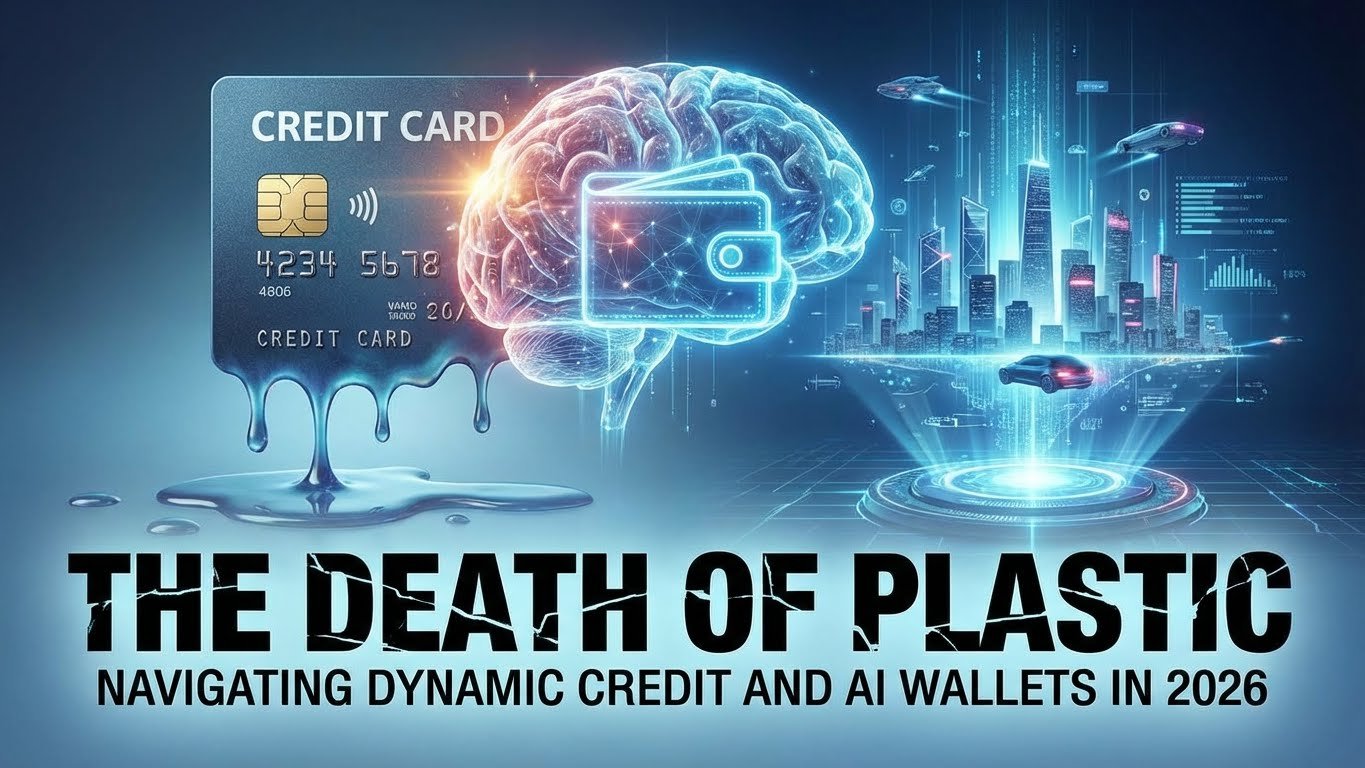
For decades, plastic ruled our wallets.
Debit cards. Credit cards. ATM cards. Loyalty cards. Business cards.
A thick wallet was normal. Losing a card was a nightmare. Replacing one took days.
But in 2026, something fundamental has changed.
Plastic cards are no longer central to how we pay, borrow, or manage money. They are slowly fading into the background, replaced by dynamic credit systems, AI-powered digital wallets, and invisible payments.
This is not a prediction anymore. It is already happening.
I realized this the day I paid for groceries, booked a flight, split a bill, earned rewards, and accessed short-term credit—without touching a physical card even once.
This article explains why plastic is dying, what dynamic credit and AI wallets really mean, how they work, and how you can safely navigate this new financial world in 2026 and beyond.
Why Plastic Cards Are Dying (And Not Coming Back)
Plastic cards were revolutionary in their time. But they were built for a different era.
Problems with Traditional Plastic Cards
Plastic cards suffer from serious limitations:
Fixed credit limits
Static reward structures
Slow fraud detection
Poor personalization
Manual approval systems
Physical dependency (loss, damage, theft)
In a world driven by real-time data, AI risk scoring, and instant payments, plastic cards feel outdated.
Banks and fintech companies know this.
That is why they are moving aggressively toward cardless finance.
What Replaced Plastic? The Rise of Dynamic Credit
The biggest shift in 2026 is not mobile payments—it is dynamic credit.
What Is Dynamic Credit?
Dynamic credit is a real-time, AI-adjusted credit system where:
Credit limits change dynamically
Interest rates adapt to behavior
Spending power updates instantly
Risk is assessed continuously
Instead of a fixed ₹1,00,000 limit, your credit availability now changes based on:
Income inflow
Spending patterns
Repayment behavior
Location and merchant type
Real-time cash flow
This system rewards financial discipline instantly, not annually.
How Dynamic Credit Works Behind the Scenes
Dynamic credit relies heavily on machine learning and alternative data.
Data Used by AI Credit Engines
Modern AI wallets analyze:
Bank account activity
Salary consistency
Utility bill payments
Subscription behavior
Location patterns
Device trust score
Merchant category spending
All this happens silently, in milliseconds.
You no longer “apply” for credit every time.
Credit is always available, adjusting itself as you spend and repay.
AI Wallets: The New Center of Personal Finance
In 2026, the wallet is no longer just for payments.
It is a financial brain.
What Is an AI Wallet?
An AI wallet is a smart financial platform that:
Manages payments
Optimizes credit usage
Predicts expenses
Auto-selects best payment method
Maximizes rewards
Prevents overspending
Detects fraud in real time
You don’t choose how to pay anymore.
The wallet chooses for you.
How AI Wallets Decide How You Pay
Imagine buying a ₹5,000 item.
Your AI wallet instantly decides:
Use cashback balance?
Use short-term credit?
Split payment across accounts?
Delay payment to avoid interest?
Use merchant offer + BNPL?
Optimize reward points?
All this happens before you even see a confirmation screen.
This is why plastic cards feel slow and dumb by comparison.
The End of Fixed Credit Cards
Traditional credit cards are based on:
One issuer
One limit
One reward structure
One billing cycle
AI wallets break all of that.
What Happens Instead?
Multiple lenders power one wallet
Credit is pooled dynamically
Best lender is selected per transaction
Interest rate varies per purchase
Rewards are optimized per merchant
This is called credit orchestration.
And it is killing single-card dependency.
Buy Now, Pay Later (BNPL) Evolves into Smart Credit
BNPL in 2026 is no longer reckless lending.
AI wallets now:
Offer BNPL only when safe
Adjust repayment timelines
Pause credit if risk increases
Convert BNPL to EMI dynamically
This prevents debt traps and improves consumer credit health.
Security Without Plastic: How Payments Stay Safe
Many people worry:
“Without cards, is my money safe?”
In reality, AI wallets are far more secure than plastic cards.
Security Features in 2026 Wallets
Biometric authentication
Device-based trust scoring
Behavioral biometrics
Geo-fencing
AI fraud detection
Tokenized transactions
If behavior changes suddenly, payments stop automatically.
Plastic cards cannot do this.
Rewards in the AI Wallet Era (High CPC Topic)
Rewards no longer depend on card type.
They depend on behavior and intent.
How Rewards Work Now
Personalized reward rates
Dynamic cashback offers
Merchant-funded incentives
Real-time reward optimization
Instant redemption
Instead of earning points blindly, AI wallets maximize reward value automatically.
The Role of Central Bank Digital Currencies (CBDCs)
By 2026, many countries have launched or piloted CBDCs.
AI wallets integrate:
Digital currency
Bank money
Credit
Investments
Payments become:
Faster
Cheaper
Fully traceable
Programmable
This further reduces the need for physical cards.
Impact on Banks and Credit Card Companies
Traditional banks had two choices:
Adapt
Die slowly
Many banks now:
Power AI wallets
Provide backend credit
Compete on risk pricing
Offer API-based finance
Credit card companies are shifting into:
Network providers
Risk analytics
Tokenization services
Plastic manufacturing is no longer the business.
What Happens to Your Credit Score?
Credit scoring in 2026 is more real-time and behavior-based.
Changes in Credit Evaluation
Monthly scores replaced by live scores
Spending discipline rewarded instantly
Reduced reliance on single metrics
Better access for gig workers
This is a massive improvement over old credit bureau systems.
Privacy Concerns: The Trade-Off
AI wallets use data—lots of it.
This raises valid concerns:
Data misuse
Over-surveillance
Algorithm bias
Regulators now enforce:
Consent-based data usage
Explainable AI
Right to opt-out
Strong encryption laws
The future is data-driven, but not lawless.
Do You Still Need Physical Cards in 2026?
Short answer: Rarely.
You might still need a card for:
International travel backups
Offline payments in remote areas
Emergency redundancy
But for daily life?
Plastic is optional.
How to Prepare for the Cardless Future
You don’t need to be tech-savvy. Just be aware.
Smart Steps to Take Today
Use digital wallets regularly
Understand dynamic credit offers
Avoid over-leveraging
Monitor AI spending suggestions
Keep manual control enabled
Read privacy permissions
AI wallets work best when you stay informed.
The Psychological Shift: Spending Feels Invisible
One danger of frictionless payments is overspending.
AI wallets now include:
Spend nudges
Monthly caps
Emotional spending alerts
Goal-based restrictions
Use these tools.
Convenience should not destroy discipline.
The Real Winner: The User
When used correctly, this new system:
Reduces fees
Improves rewards
Lowers interest
Increases access to credit
Improves financial health
For the first time, finance adapts to humans—not the other way around.
Final Thoughts: Plastic Isn’t Dead—But It’s No Longer King
Plastic cards won’t vanish overnight.
But they are no longer the center of finance.
AI wallets and dynamic credit are faster, smarter, safer, and more personalized.
The future of money is:
Invisible
Intelligent
Adaptive
And it’s already here.
Frequently Asked Questions (FAQs)
1. Are physical credit cards completely obsolete in 2026?
No, but they are rarely required for daily transactions.
2. Are AI wallets safe to use?
Yes, when provided by regulated financial institutions with strong encryption.
3. Can AI wallets overspend on my behalf?
No. You control limits, rules, and permissions.
4. How does dynamic credit differ from traditional loans?
Dynamic credit adjusts limits and pricing in real time based on behavior.
5. Will AI wallets replace banks?
No. Banks power the backend infrastructure.
6. Is my data safe in AI wallets?
Reputed wallets follow strict data protection and consent laws.
7. Can AI wallets improve credit scores?
Yes, by rewarding real-time responsible behavior.
Disclaimer
This article is for educational purposes only and does not constitute financial advice. Always read official terms and consult financial professionals when needed.
